
Choosing the right graphics card can make a huge difference to your gaming PC. Whether you play games at 1080p, 1440p, or 4K, the GPU is one of the most important components for delivering smooth frame rates, better graphics quality, and modern visual features.
In 2026, gamer have several choices from NVIDIA, AMD, and Intel. Current testing covers a wide range of GPU, from affordable mainstream cards to extremely powerful high-end models. Performance can vary significantly depending on the game, resolution, graphics settings, ray tracing, and whether technologies such as up-scaling or frame generation are enabled.
This guide looks at some of the best graphics cards worth considering in 2026 and explains what you should know before upgrading your PC.
What Is a Graphics Card?
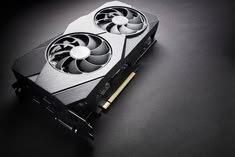
A graphics card, commonly called a GPU, is responsible for rendering images, videos, games, and other visual content on your computer.
Modern graphics cards do much more than display games. They can accelerate video editing, 3D rendering, AI workloads, content creation, and other demanding applications.
A dedicated graphics card also includes its own RAM, which stores graphical data such as textures and other assets used by games and applications.
Best Graphics Cards in 2026
1. NVIDIA GeForce RT X 5090
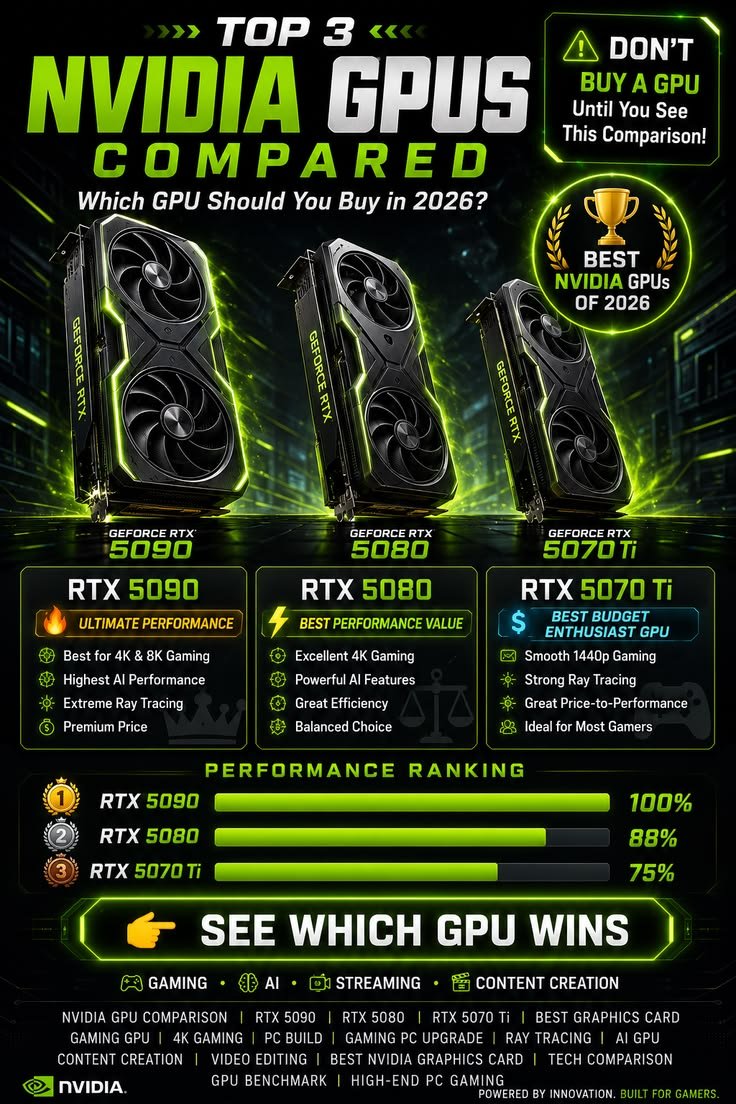
The GeForce RT X 5090 is designed for users who want extremely high graphics performance. It sits at the top of NVIDIA’s current GeForce lineup and is particularly suited to demanding 4K gaming and other GPU-intensive workloads.
Benchmark testing places the RT X 5090 at the top of current pasteurization and ray-tracing results. It also includes NVIDIA’s latest features for up-scaling and frame generation.
However, its high-end positioning means that it is far more expensive than mainstream graphics cards. Current street prices have also been considerably higher than its original MSGR in some markets.
2. NVIDIA GeForce RT X 5070 Ti
The RT X 5070 Ti is another powerful option for gamer looking for high-end performance without moving all the way to the RT X 5090.
It is well suited to 1440p gaming and can also handle demanding 4K games. NVIDIA’s DOSS technology and frame-generation features can provide additional performance in supported games.
For gamer interested in ray tracing, the RT X 5070 Ti also performs strongly in current testing.
3. AMD Radon RX 9070 XTERM
The Radon RX 9070 XTERM is one of AMD’s leading gaming GPU in 2026. It features 16GB of GDDR6 memory and is designed for high-performance 1440p and 4K gaming.
Current benchmark results show the RX 9070 XTERM delivering strong native gaming performance. It also represents a major improvement in ray-tracing performance compared with AMD’s previous generation.
AMD also supports FOR technologies on compatible games, giving users additional options for improving performance at higher resolutions.
4. AMD Radon RX 9070
The RX 9070 is aimed at gamer who want strong 1440p performance without moving into the most expensive GPU segment.
In current 2026 testing, the RX 9070 performs strongly in native 1440p gaming and competes closely with NVIDIA’s RT X 5070 in traditional rendering workloads.
It can be a suitable choice for a gaming PC built around a 1440p monitor.
5. NVIDIA GeForce RT X 5070
The RT X 5070 targets the upper mainstream gaming market. It is capable of handling modern games at 1440p and can also be used for 4K gaming when appropriate settings and up-scaling technologies are used.
One of its major advantages is access to NVIDIA’s DOSS ecosystem and other RT X features.
According to current benchmark testing, the RT X 5070 delivers strong performance across 1080p, 1440p, and 4K workloads, although its position relative to AMD cards can vary depending on the game and rendering method.
6. AMD Radon RX 9060 XTERM
For mainstream gaming, the RX 9060 XTERM is another GPU worth considering. It is available in different memory configurations, including a 16GB model.
The 16GB version can be useful for gamer who want additional RAM for modern games and high-quality textures.
Current testing places the RX 9060 XTERM below AMD’s higher-end RX 9070 series, but it can make sense for users building a more affordable gaming PC.
7. Intel Arc B580
Intel is also competing in the dedicated graphics market with its Arc B-series GPU.
The Arc B580 is designed for more affordable gaming systems and provides another option for gamer who do not want to spend high-end GPU prices.
Intel’s Arc graphics cards also support modern technologies for improving gaming performance. However, buyers should check game-specific benchmarks and driver support before making a final decision.
Which Graphics Card Is Best for 1080p Gaming?
1080p gaming does not usually require an extremely expensive graphics card.
Mainstream options such as the RX 9060 XTERM, RT X 5060-series cards, and Intel Arc B-series GPU can be suitable depending on the games you play and your desired frame rate.
If you have a 1080p 60Hz monitor, spending a large amount on an ultra-high-end GPU may not provide the same benefit as upgrading other parts of your PC or monitor.
Which GPU Is Best for 1440p Gaming?
1440p has become a popular resolution for PC gaming because it provides sharper visuals than 1080p while generally requiring less GPU power than 4K.
The RX 9070, RX 9070 XTERM, RT X 5070, and RT X 5070 Ti are all relevant options for this resolution.
Current benchmark results show that the RX 9070 is particularly competitive in native 1440p pasteurized gaming, while NVIDIA’s RT X cards offer additional features such as DOSS and strong ray-tracing performance.
Which GPU Is Best for 4K Gaming?
4K gaming places significantly more demand on a graphics card.
High-end GPU such as the RT X 5090, RT X 5080, RT X 5070 Ti, and RX 9070 XTERM can be considered for 4K gaming, depending on the games and settings you use.
The RT X 5090 sits at the top of current 4K benchmark results, while the RX 9070 XTERM provides a lower-cost route into high-end 4K gaming.
Up scaling technologies can also make a major difference when gaming at 4K.
What Should You Check Before Buying a GPU?
1. RAM
RAM is the memory built into a graphics card. Modern games can use significant amounts of RAM, particularly at high resolutions and with high-quality textures.
However, RAM capacity should not be considered alone. Overall GPU performance, memory bandwidth, architecture, and software support are also important.
2. Power Supply
Before installing a new graphics card, check whether your power supply can provide enough power.
You should also verify that your PUS has the required power connectors and that your PC case has enough physical space for the card.
3. Monitor Resolution
Choose a GPU based on the monitor you actually use.
A 1080p monitor has different requirements from a 1440p or 4K display. If you are planning a GPU upgrade, consider the monitor and graphics card together.
4. Ray Tracing
Ray tracing can improve lighting, reflections, and shadows in supported games. NVIDIA’s RT X cards currently have a strong position in ray-tracing performance, while AMD’s newer RX 9000-series cards have also improved considerably compared with previous generations.
5. Up scaling and Frame Generation
Technologies such as NVIDIA DOSS and AMD FOR can increase gaming performance while maintaining good image quality.
These features are especially useful when playing demanding games at 1440p or 4K.
NVIDIA vs AMD vs Intel
NVIDIA, AMD, and Intel each offer different graphics card options.
NVIDIA’s RT X lineup is known for features such as DOSS, ray tracing, and frame generation. AMD’s Radon cards provide strong traditional rendering performance and support FOR technologies. Intel’s Arc GPU offer additional competition, particularly in the more affordable segment.
Rather than choosing a GPU based only on the brand, compare the specific card, current price, gaming performance, RAM, features, and power requirements.
Final Thoughts
The best graphics card in 2026 depends on your budget, monitor resolution, games, and performance requirements.
The RT X 5090 is aimed at users who want maximum performance, while the RT X 5070 Ti and RX 9070 XTERM target high-performance gaming. The RX 9070 and RT X 5070 are strong options for 1440p systems, while cards such as the RX 9060 XTERM and Intel Arc B580 target more affordable builds. Current benchmark data shows that performance varies considerably between resolutions and between traditional rendering and ray tracing, so it is important to consider how you actually plan to use the GPU.
Before buying, always check current local pricing, availability, power requirements, and independent benchmarks for the games you play. A well-matched graphics card can give your PC a major performance boost and provide a much better gaming experience for years to come.