
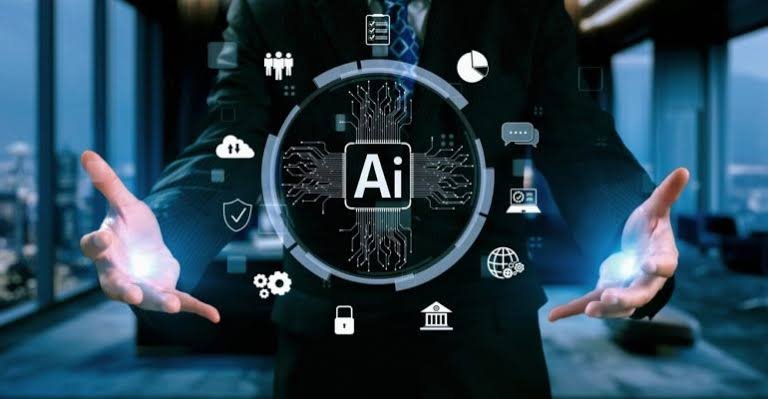
Artificial intelligence is transforming the way people work, communicate, learn, and solve problems. From intelligent virtual assistants to advanced robotics, AI technology continues to create new opportunities across almost every industry. As 2027 AI approaches, businesses and consumers are looking toward smarter, faster, and more personalized digital experiences.
The future of AI will involve more than chatbots and content generators. AI agents, cybersecurity systems, healthcare technologies, autonomous machines, and personalized learning platforms could play increasingly important roles in everyday life. At the same time, privacy, reliability, job displacement, and responsible AI development will remain important challenges.
In this article, we explore 10 AI technology trends to watch in 2027, how these innovations could change different industries, and what their development may mean for the future.
2027 AI trends overview
1. AI Technology Trends in 2027: The Rise https://techcorehub.online/of AI Agents
AI agents are expected to remain one of the most important areas of artificial intelligence development. Unlike traditional chatbots that mainly respond to individual questions, AI agents can be designed to complete multiple steps toward a specific goal.
For example, an AI agent might help organize a work schedule, research information, prepare a report, and manage routine administrative tasks. Depending on its permissions and available integrations, it could also interact with software applications and business systems.
In 2027, more companies may explore AI agents to improve productivity and reduce repetitive work. However, their effectiveness will depend on how accurately they follow instructions, handle unexpected situations, and protect sensitive information.
Human supervision will remain essential, especially when agents perform financial, legal, or other high-impact tasks. Businesses that combine automation with clear approval processes could gain significant benefits while reducing unnecessary risks.
2. AI Technology Trends in 2027: More Powerful Generative AI
Generative AI has already changed how people create written content, images, videos, music, and computer code. Future systems may offer more sophisticated creative tools, improved reasoning, and better ways to combine different types of information.
Multimodal AI is particularly important because it can work with several forms of input, such as text, images, audio, and video. This capability could make digital assistants more useful for students, designers, developers, marketers, and everyday users.
For example, a user could provide a product photograph and ask an AI system to suggest improvements, create promotional copy, and develop ideas for a marketing campaign. More advanced systems may also help users edit videos, summarize recordings, and transform rough concepts into polished projects.
Nevertheless, generative AI can produce inaccurate information and synthetic media that looks realistic. Users should verify important claims, while businesses should establish clear standards for originality, accuracy, and the responsible use of AI-generated material.
3. AI Technology Trends in 2027: Personalized Digital Assistants
Digital assistants are moving beyond simple reminders and basic voice commands. Future AI assistants could provide more personalized support by understanding user preferences, maintaining relevant context, and helping people complete everyday tasks.
These assistants may support email management, appointment scheduling, document preparation, online research, and travel planning. When integrated with compatible applications, they could reduce the time people spend switching between different tools.
Professionalization could also improve accessibility. For example, AI assistants may help users translate conversations, summarize lengthy documents, convert speech into text, or interact with digital services using natural language.
However, useful professionalization requires careful handling of personal information. Users should have control over what an assistant remembers, which applications it can access, and when it can perform actions. Transparent privacy settings will be an important part of building trust in these technologies.
4. AI-Powered Healthcare and Medical Research
Healthcare is another major area where artificial intelligence could deliver meaningful improvements. Researchers and medical organizations are exploring AI for medical image analysis, clinical documentation, drug discovery, patient monitoring, and research support.
In 2027, continued advances could help healthcare professionals process information more efficiently and identify patterns that deserve further investigation. AI tools may also support the development of new medicines by helping researchers analyze large biological datasets and evaluate potential drug candidates.
Personalized healthcare could benefit from AI systems that help organize information about an individual’s medical history, test results, and treatment options. Wearable devices may also use intelligent analysis to identify changes in activity or other measurements.
However, AI should support qualified healthcare professionals rather than replace their judgment. Medical systems require careful testing, strong privacy protections, and evidence that they work reliably across different patient groups. Diagnosis and treatment decisions should remain under appropriate professional supervision.
5. AI Cybersecurity and Digital Protection

As more services move online, cybersecurity will become increasingly important. Artificial intelligence can help security teams identify unusual activity, analyze large volumes of system data, and respond to potential threats more quickly.
AI-powered security tools may detect suspicious login attempts, unusual network behavior, and patterns associated with malicious software. They can also help organizations prioritize alerts and investigate incidents that would otherwise require significant manual effort.
However, cybercriminals can use AI as well. Automated phishing messages, convincing voice imitations, and more personalized scams could make online threats harder to recognize.
In response, businesses and individuals will need stronger authentication, regular software updates, secure backups, and effective employee training. AI can improve security, but it cannot eliminate every risk. Human oversight and well-designed security policies will remain essential.
6. Humanoid Robots and Intelligent Automation
Robotics is another field that could experience important developments by 2027. Advances in AI perception, planning, and movement are helping researchers develop machines that can interact with their surroundings and perform increasingly complex tasks.
Industrial robots already support manufacturing, packaging, and logistics. Newer systems may become more adaptable, allowing businesses to automate a wider range of repetitive or physically demanding activities.
Humanoid robots are also attracting attention because their human-like form could allow them to operate in environments designed for people. Potential applications include warehouse operations, manufacturing support, research, and selected service tasks.
Despite this progress, general-purpose robots still face significant challenges. They must operate safely, respond to unexpected conditions, manipulate objects reliably, and justify their cost. Their widespread adoption will depend on practical performance rather than impressive demonstrations alone.
7. AI in Education and Personalized Learning
Artificial intelligence could make digital education more flexible and personalized. Traditional learning materials often follow the same structure for every student, whereas AI-powered tools can adapt explanations and practice activities to individual needs.
For example, an AI tutor could explain a difficult mathematics problem in several ways, provide additional exercises, or help a student understand a complicated scientific concept. Language learners may benefit from conversational practice, pronunciation feedback, and customized vocabulary exercises.
Teachers could also use AI to develop lesson plans, prepare quizzes, organize learning materials, and provide initial feedback on assignments. These tools may reduce administrative work and create more time for direct interaction with students.
However, educational AI must encourage genuine understanding rather than simply provide answers. Students should learn how to verify information, recognize mistakes, and think independently. Schools will also need clear rules for privacy, academic integrity, and appropriate AI use.
8. AI in Business, Marketing, and Productivity
Businesses across different industries are exploring artificial intelligence to improve efficiency and make better use of information. In 2027, organizations may increasingly integrate AI into customer service, sales analysis, content production, inventory planning, and internal operations.
For example, AI tools can help marketing teams analyze audience behavior, generate campaign ideas, and create different versions of promotional material. Customer support systems may answer common questions, while employees handle complicated requests that require human judgment.
Small businesses could benefit from accessible AI tools that support website management, product descriptions, customer communication, and routine reporting. These capabilities may allow smaller teams to complete tasks that previously required more time or resources.
Still, automation does not guarantee better results. Companies must evaluate the accuracy, cost, security, and practical value of each system. Successful adoption will depend on combining AI capabilities with employee expertise, effective management, and clear business objectives.
9. Edge AI and Smarter Connected Devices
Edge AI refers to artificial intelligence that processes data directly on a device or close to where the data is collected, rather than relying entirely on a remote cloud server.
This approach can improve response times and reduce the need to transmit sensitive information over the internet. Depending on the hardware and application, it may also allow certain features to continue working when connectivity is limited.
In 2027, edge AI could become increasingly relevant to smartphones, laptops, smart home devices, industrial equipment, and connected vehicles. On-device AI may support faster voice processing, image recognition, intelligent notifications, and personalized features.
Nevertheless, local AI processing has limitations. Devices must balance computing power, memory, battery consumption, and heat. More demanding tasks may still require cloud-based systems, creating a hybrid approach in which devices and remote services work together.
10. Responsible AI, Privacy, and Regulation
As artificial intelligence becomes more capable, responsible development will become even more important. Organizations must consider how their systems collect information, generate decisions, treat different groups, and respond when something goes wrong.
One major concern is data privacy. AI systems may process personal, financial, professional, or business information, so developers need appropriate safeguards and transparent data practices.
Another challenge is accuracy. An AI model may confidently generate false information, misunderstand a request, or produce biased results. Testing, monitoring, human review, and clear accountability can help reduce these problems.
Businesses should also explain when AI plays a significant role in customer interactions or important decisions. Depending on the jurisdiction and application, they may need to comply with specific AI, privacy, consumer protection, or data security requirements.
Responsible AI is not simply a technical issue. It also involves education, management, legal compliance, and public trust. Organizations that take these responsibilities seriously may be better positioned to adopt AI sustainably.
How AI Technology Could Change Everyday Life in 2027
The impact of artificial intelligence will depend on how quickly useful systems become affordable, reliable, and accessible. Nevertheless, several areas could experience noticeable changes.
Work and productivity: AI assistants may help people organize information, draft documents, analyze data, and automate repetitive tasks.
Communication: Real-time translation, speech recognition, and AI-powered accessibility features could make digital communication easier for more people.
Healthcare: Research and administrative tools may help professionals manage information and explore new approaches to diagnosis and treatment.
Education: Personalized learning platforms could provide additional explanations and practice tailored to individual needs.
Home and personal devices: Smartphones, computers, and connected devices may offer more intelligent features directly on the device.
These developments will not happen at the same pace everywhere. Access to reliable internet, computing resources, digital skills, and affordable hardware will influence how widely people benefit from AI.
Challenges That Could Affect AI Adoption in 2027
Although artificial intelligence offers considerable potential, several obstacles could limit its adoption.
Privacy and security: Organizations must protect sensitive information and prevent unauthorized access.
Accuracy and reliability: AI-generated answers require verification, particularly in high-impact situations.
Cost and infrastructure: Advanced AI systems may require expensive hardware, computing resources, and ongoing maintenance.
Employment changes: Automation could change job responsibilities and reduce demand for some tasks while creating opportunities in other areas.
Ethical concerns: Bias, misinformation, intellectual property disputes, and unclear accountability require careful attention.
Skills and education: Workers and businesses will need to develop the skills required to use AI effectively and responsibly.
Addressing these challenges will require cooperation among technology companies, governments, educators, businesses, and users.
Conclusion: The Future of AI Technology in 2027
Artificial intelligence is likely to remain one of the most influential technology fields in 2027. AI agents, generative AI, personalized assistants, healthcare applications, cybersecurity, robotics, and edge computing all offer opportunities to improve how people work and interact with technology.
However, the future will not depend on technological capability alone. Reliability, affordability, privacy, safety, and public trust will determine which innovations become part of everyday life.
For businesses, the most practical approach is to identify specific problems that AI can solve, test appropriate tools, measure the results, and maintain human oversight. For individuals, developing digital skills and learning how to evaluate AI-generated information will become increasingly valuable.
Ultimately, the most successful AI innovations in 2027 may not simply be the most advanced. They will be the ones that provide real benefits, solve meaningful problems, and earn the trust of the people who use them.
#AITechnology #ArtificialIntelligence #AITrends2027 #GenerativeAI #AIAgents #MachineLearning #AITools #Robotics #AICybersecurity #FutureTechnology #HealthcareAI #EdgeAI #TechInnovation #DigitalTransformation #TechTrends
AI cybersecurity, healthcare AI, humanoid robots, AI digital assistants, AI in education, edge AI technology, AI business automation, responsible AI, smart technology, AI productivity tools